Posted by Paul on Jul 28, 2026, 12:53 PM


Fort Jervois
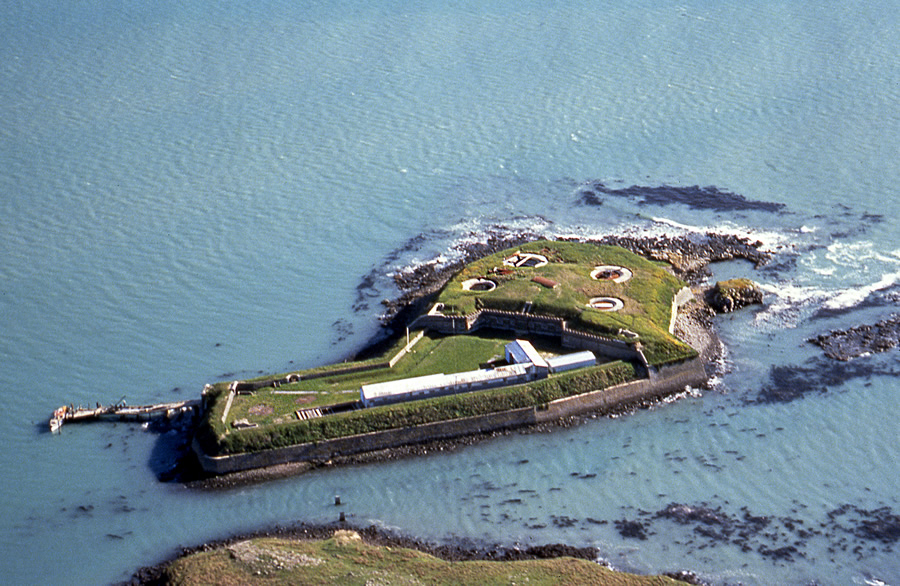
Fort Jervois (1895), Lyttelton Harbour
Xenophobia’s ramparts on the sea?
New Zealanders got excited by their first “Russian Scare” long before the Soviet Union existed. In 1873 a newspaper ran a fake story about a Russian warship attacking Auckland. For most of that period New Zealand relied on the British Royal Navy, but from the 1880s until 1957 the country also built its own coastal defence batteries.
Ngāi Tahu last used Rīpapa (“mooring rock”) as a refuge pā in the late 1820s.
In 1857 it was marked as a possible gun battery site.
In 1873 it became a quarantine station for immigrants and was nicknamed Humanity Island — a name that must have felt bitter to the Taranaki Māori held prisoner there in 1880.
In the mid-1880s rising tension between Britain and Russia pushed New Zealand to fortify its main ports. Rīpapa became part of Lyttelton’s defences, along with Battery, Spur and Erskine Points.
The quarantine buildings were pulled down and the top 5 metres of the island were cut away.
A submarine mining depot was finished in 1886, but funding cuts slowed the rest of the work, so prison labour (nicknamed the “Devil’s Own Brigade”) was used.
By 1889 the big guns — two 8-inch and two 6-inch disappearing guns — were in place, though building continued until 1895.
Named Fort Jervois after a former governor who was an expert on coastal defence, the fort looked dramatic with its mock castle features, but experts criticised the guns for being placed too close together.
Fort Jervois never fired a shot in anger. In 1913 it held young conscientious objectors (the “Ripapa Island martyrs”) who went on hunger strike. In World War I it served as battery headquarters and briefly imprisoned the famous German raider Lieutenant Commander von Luckner.
It was reduced to a magazine in 1922, abandoned in 1925, then reused as a magazine from 1936.
One old gun was briefly put back into limited service in 1941 but was declared useless in 1943. The army left in 1946.
In 1990 the island became an historic reserve and received an engineering heritage plaque. The Department of Conservation now looks after it. Thanks to sea cadets who used the site, it stayed remarkably well preserved. Before the 2010–11 earthquakes visitors could still see the 1886 torpedo store, mine store, fortifications and two guns.
The island is currently closed for repairs.
