Posted by Paul on Jul 26, 2026, 1:54 PM


Waikite Valley Hot pools
Open 7 days from 10.30am to 8pm
In the quiet hills of Waikite Valley, a dream took shape in 1969. Local people approached the Rotorua County Council with a simple idea: to build a hot thermal pool so that everyone could enjoy the healing waters that rose naturally from the ground. Permission was granted, and the community rolled up its sleeves. Through fundraising and around 4,000 hours of unpaid labour, the pools finally opened in 1972.
Today those same waters still draw people from near and far. Six outdoor bathing pools, private pools and peaceful camping spots sit under open skies, managed with care by The Living Waters of Waikite Valley. Yet the true heart of the place lies just a short walk away.
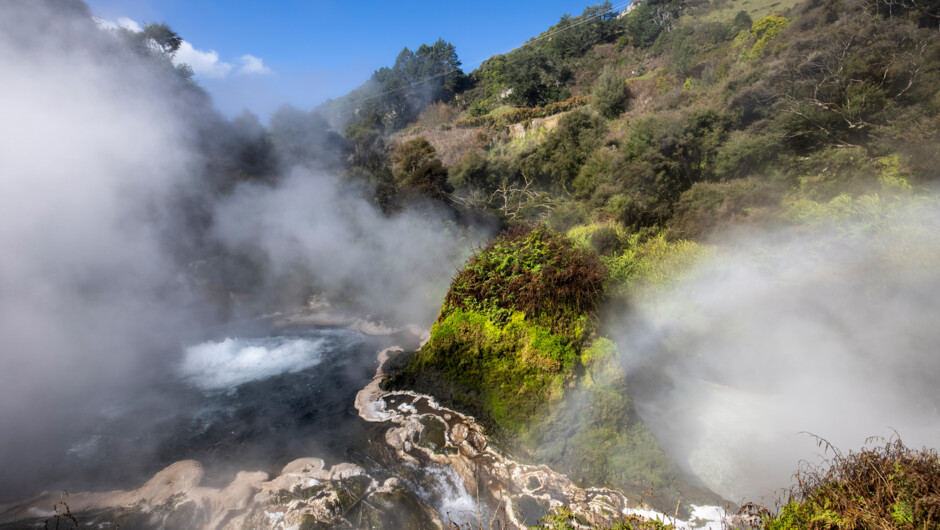
A gentle five-to-ten-minute trail leads visitors through steam and soft green growth to Te Manaroa Spring — the largest single source of boiling water in New Zealand. Here the earth itself seems to breathe. Thousands of litres of super-heated water surge upward every minute, tumbling into the Otamakokore Stream and leaving behind delicate white trails of calcite. The spring is both powerful and strangely beautiful, a living reminder of the fire that still burns deep beneath the land.
Along the path, the story becomes even older. Tiny geothermal mosses grow in the warm stream, plants whose ancestors first appeared more than 360 million years ago — an evolutionary step beyond simple algae. Nearby grows the rare Christella fern. This delicate plant is found in only a handful of geothermal spots south of Rotorua, yet it also thrives in the rainforests of South America. The reason is written in the deep past: long ago New Zealand, Australia and South America formed one great land mass called Gondwanaland. When the continents drifted apart some 85 million years ago, the Christella fern was one of the few species that survived on both sides of the new oceans.
Standing beside the roaring spring, with ancient mosses at your feet and steam drifting through the ferns, it is easy to feel the layers of time. From the determined volunteers of the 1970s to the prehistoric plants that have clung to this warm ground for millions of years, Waikite Valley holds a quiet, living history — one that still invites people to soak, to walk, and to wonder.